Showing posts with label History. Show all posts

Sunday, August 29, 2010

Dawks And His Newsletter

You'd think that readers leaving comments at the bottom of newspaper articles only started in the early 2000s.

But it dates back to at least '96. That's 1696.

According to Slate,

In 1696, British publisher Ichabod Dawks left blank space in his pages for readers to supplement the words he printed. The first edition of Dawks's News Letter, dated Aug. 4, 1696, told readers, "This letter will be done upon good writing-paper, and blank spaces left that any gentleman may write his own private business."


And it spread to the colonies:

....the Boston News-Letter, first published in 1704. Its proprietor, John Campbell, deliberately left blank space in its pages so subscribers could annotate and otherwise append their ideas and "news" to the newspaper. These amendments weren't aimless jottings, either. Newspapers were routinely shared after purchase, and the notes readers added in the spaces and margins were designed to edify the friend or acquaintance the reader next forwarded his paper to.


Makes me wonder if this continued throughout the 18th century, and what impact it had on the American Revolution....

And makes me think that Ichabod needs to be a little better known, he's not even mentioned in wikipedia!

Saturday, January 02, 2010

A "Ghost" Story To Start The New Year


This is a true story about a former Essex MP - Major Sir Frederick Carne Rasch.

Rasch seemed to have had a pretty good life. He went to Eton and then Trinity College Cambridge, and did a lot of rowing there (that’s rowing boats , not rowing in arguments). He spent ten years in the Dragoon Guards, became a director of a couple of breweries, and then went into parliament as a Conservative, representing Essex South-East from 1886 until 1900, and then Chelmsford until 1908.

A magazine article on 1896 described him as “an Essex man and wholesome, bluff, genial fellow of strong opinions; who calls himself a Democratic Tory.” The very first question he asked in the House of Commons was about cavalry saddles, and you can imagine him in one of the Commons bars having a cigar and a few whiskies with his friends and talking about horses, rowing and country pursuits.

Rasch clearly had a social conscience, for example , speaking up several times in the House of Commons for poor farm labourers in Canewdon. But he definitely wasn’t a progressive- he was very much against giving the children of agricultural workers much of an education : “I know very well I am not an enthusiast, a crank, or a fanatic on the subject of education in the agricultural districts. To speak plainly, I detest it so far as I am concerned. I am here simply as an agricultural Member, principally to keep the rates down, and particularly the rates for education.”

So all in all he was a very down-to-earth chap. Not the kind of person you’d connect with any kind of paranormal events. And yet.....

It was the spring of 1905. The MP Sir Gilbert Parker described what happened as follows:

"I wished to take part in the debate in progress, but missed being called. As I swung round to resume my seat I was attracted first by seeing Sir Carne Rasch out of his place, and then by the position he occupied. I knew that he had been very ill, and in a cheery way nodded towards him and said, `Hope you are better.'
"But he made no sign and uttered no reply. This struck me as odd. My friend's position was his and yet not his. His face was remarkably pallid. His expression was steely. It was a altogether a stony presentment -- grim, almost resentful.
"I thought for a moment. Then I turned again toward Sir Carne Rasch, and he had disappeared. That puzzled me, and I at once went in search of him. I expected, in fact, to overtake him in the lobby. But Rasch was not there. No one had seen him. I tried both the Whips and the doorkeeper, equally without avail. No one had seen Sir Carne Rasch.
"I went round the House, inquiring in all the corridors and to the same end -- Sir Carne Rasch had not been seen. Going again to the lobby, I heard that Sir Henry Meysey-Thompson, who was at the lobby post office, had also been inquiring for the major, but without result.
"I joined Sir Henry, and we exchanged views."


Sir Gilbert was interested in psychic phenomena and wondered if Rasch had died and appeared as a ghost! Rasch was actually at home, ill with influenza, but he was neither dead nor dying. He seemed have been amused by the whole affair and couldn’t resist having a friendly dig at the Liberals:

"I was rather ill at the time, and had to keep my bed, and why I should have gone to the House of Commons that night I don't know. However, the Express of Friday says that I did. I am worth a good many dead ones yet, I hope. At any rate, I mean to go on a little longer.
"I feel, however, that I ought to apologize to the Liberal Party for not having died when I suppose I ought. Had I done so it would have saved them a good deal of trouble. If I have another chance perhaps I will endeavor to oblige them."


Rather unexpectedly, there was a response from the Liberals that confirmed this ghostly sighting. A letter from Colonel Sir Arthur Hayter, published in the Daily News said:

"Sir, On my way home to Southhill Park today I noticed in The Daily News that Sir Carne Rasch had been seen in the House of Commons by Sir Gilbert Parker when he was reported to be lying ill at home, and that further evidence in confirmation was required.
"I beg to say that I not only saw Sir Carne Rasch myself sitting below the gangway (not in his usual seat), but that I called the attention of Sir Henry Campbell-Bannerman to whom I was talking on the Front Opposition Bench, saying that I wondered why all the papers inserted notices of Sir Carne Rasch's illness, while he was sitting opposite apparently quite well. Sir Henry replied that he hoped his illness was not catching. -- Yours, etc.”


Sir Henry Campbell Bannerman became Prime Minister the next year, so should certainly trusted as a witness....

The full story abou the incident in the Commons can be found here.

Monday, December 07, 2009

Essex Village Life In the Grim Old Days- Water By The Bucket, Misappropriated Funds, And Poverty.

I'm grateful to Jonathan Calder for pointing us in direction of a website created by an outfit called Millbanksystems. It is basically an online register of what anyone has said in parliament in the last 200 years.

This may seem dull, but if you search for certain words- for example the name of your village or town- you can obtain some pretty illuminating information about what things were like in the good old days bad old days.

For example, I searched and found each of the 21 times the Essex village of "Canewdon" has been mentioned in parliament between 1803 and 2005. Why would an MP want to mention Canewdon? Not for very positive reasons. It's easy to build up a picture of just how grim life used to be. For example from 1924:

20 February 1924 vol 169 c1765W 1765W

§ Mr. HOFFMAN

asked the Minister of Health if he is aware that the villagers of Canewdon, Essex, have to pay per bucket for water; and if he will make representations to the Rochford Rural District Council to secure adequate facilities being provided?

§ Mr. WHEATLEY

My attention has been drawn to this matter, but I will have inquiries made.


there was something irregular going on in 1897:

CANEWDON CHARITIES, ESSEX.
HC Deb 03 August 1897 vol 52 cc239-40 239

MR. J. CARVELL WILLIAMS (Notts, Mansfield)

I beg to ask the hon. Member for Thirsk, as Charity Commissioner, whether it has been reported to the Charity Commissioners that the Trustees of the Canewdon, Essex, Charities, have for many years annually voted out of the charity funds a sum of money to the vicar of the parish for a treat to the children of the day schools, and that only part of that sum has been expended for that purpose, the rest being spent on hymn books and prayer books for the Church Sunday schools; whether such an appropriation of the charity funds is legal; and what action have the Charity Commissioners taken in the matter?

§ MR. HANBURY

My hon. Friend has asked me to say that the Charity Commissioners understand that the Trustees of this charity have intrusted the vicar every year with the expenditure of a sum of £5 part of the funds in their hands applicable for the benefit of the poor of the parish. It is alleged that this sum or part of it has been expended in the manner stated. The action of the Trustees in this respect is irregular. A new scheme for the regulation of this charity is in draft and will shortly be established. That scheme contains a clause expressly prohibiting the practice in question.


and agricultural workers faced poverty:

1889

MAJOR RASCH (Essex, S.E.)

.... the point I desire to raise is of considerable interest to agricultural labourers in my constituency, and it affords a typical instance of the diversion of a fund. towards objects in which this class have no interest. ... the claim is that as there is a certain fund left for the benefit of agricultural labourers, they have a right that a certain portion of the money should be devoted to reducing the expenses connected with allotment, and they applied through me to the Charity Commissioners with that object; but the Commissioners said they could do nothing in the matter, and met me with a non possumus.


Money which used to be spent upon doles, coals, bread, &c., for the poor is now spent in payment of salaries, the purchase of books, and for other purposes in which the labourers have not the faintest interest. Under a scheme sanctioned by the Court of Chancery, the residue of the fund is to be spent upon the agricultural labourers; but I suppose I shall be reminded that, owing to the decline in the value of land in Essex, there is no residue, and also that the money is spent under an Act sanctioned by Parliament in 1852, and with which the Commissioners have nothing to do. But I venture to think we sit here to rescind and abrogate such obsolete schemes as have been passed almost entirely in the interests of the rich, and certainly to the prejudice of my poorer constituents.


Here's the same MP for SE Essex, Major Rasch again in 1893:

MAJOR RASCH (Essex, S.E.)

I beg to ask the Charity Commissioner whether he is aware that J. Whitwell, labourer, 75 years old, had notice to quit a cottage the property of the Canewdon Charities, and was subsequently fined for refusing to give up possession; and if the property of those Charities could be dispensed, as intended by the donors, for the relief of the deserving poor, and not devoted to other and totally different purposes?


Incidentally Major Rasch was certainly no left-winger - in fact Major Sir Frederick Carne Rasch was Tory. I hope to write about him again closer to Christmas.

Sunday, December 06, 2009

Quote Of the Day

Catherine Bennett in the Guardian:

For much of its history the length of the average union, before it was ended by the death of a partner, was the same as it is now, before being terminated by divorce: 11 years.

Thursday, February 12, 2009

The Centre Of The Scientific Universe

Just for today, unglamorous Rochford District is very close to being the scientific centre of the known universe.

Following last week's surprising revelation that Britain's first airfield was probably in the tiny village of South Fambridge, we can celebrate the 200th anniversary of the birth of Charles Darwin, knowing that the last resting place of HMS Beagle was near the equally tiny village of Paglesham

All we need now is to find some remains of Cavorite in Rawreth....

Here's To You , Mr Robinson

Like maybe 99.5 % of Europeans, I'm not a baseball fan, and I had barely heard of Jackie Robinson until last week. I'm now aware that he was the guy who broke through the colour barrier in baseball in the late 1940s.


The reason I know more about him now is that I stumbled upon this account of his fight before he was famous. A fight to sit where he liked on an army bus. A gripping story...

Saturday, December 08, 2007

Health and Safety In The 1920s

On the rather good Blognor Regis blog the author tells how he came across a memorial in Tipton Cemetery. It's in memory of 19 female workers killed in a factory explosion in 1922. A shocking thing to stumble across if you weren't expecting it...

The memorial says 'nineteen girls' and this isn't a euphemism for 'young women' - there were 13 and 14 years olds killed, whilst worked in premises breaking up miniature rifle cartridges.They were earning 4 to 6 shillings per week. It's well worth reading the material here.

This is a reminder that whilst the 'health and safety' culture is sometimes overzealously enforced nowadays, and sometimes merits criticism, overall it's better to have it than to be without it...

And bad things happened in the USA as well...

Wednesday, June 20, 2007

Loving Vs Virginia


1958 was the year I was born. 13 years after the Allies defeated Hitler and his genocidal, racist Nazis.

And yet in 1958 people of different races couldn't get married in Virginia or many other states of the USA. I'm amazed that I didn't hear about the story of Mildred Jeter and Richard Loving until today.

As Wikipedia tells it:

The plaintiffs, Mildred Jeter (a woman of black and Rappahannock Indian descent) and Richard Perry Loving (a white man), were residents of the Commonwealth of Virginia who had been married in June of 1958 in the District of Columbia, having left Virginia to evade a state law banning marriages between any white person and a non-white person.

Upon their return to Virginia, they were charged with violation of the ban, pleaded guilty, and were sentenced to one year in prison, with the sentence suspended for 25 years on condition that the couple leave the state of Virginia. The trial judge in the case, Leon Bazile, echoing Johann Friedrich Blumenbach's 18th-century interpretation of race, proclaimed that Almighty God created the races white, black, yellow, Malay and red, and he placed them on separate continents. And but for the interference with his arrangement there would be no cause for such marriages. The fact that he separated the races shows that he did not intend for the races to mix.

The Lovings moved to the District of Columbia, and in 1963 began a series of lawsuits seeking to overcome their conviction on Fourteenth Amendment grounds, ultimately reaching the Supreme Court.


This week is the 40th anniversary of their victory, and Mildred Loving has released a statement:

When my late husband, Richard, and I got married in Washington, DC in 1958, it wasn’t to make a political statement or start a fight. We were in love, and we wanted to be married.

We didn’t get married in Washington because we wanted to marry there. We did it there because the government wouldn’t allow us to marry back home in Virginia where we grew up, where we met, where we fell in love, and where we wanted to be together and build our family. You see, I am a woman of color and Richard was white, and at that time people believed it was okay to keep us from marrying because of their ideas of who should marry whom.

When Richard and I came back to our home in Virginia, happily married, we had no intention of battling over the law. We made a commitment to each other in our love and lives, and now had the legal commitment, called marriage, to match. Isn’t that what marriage is?

Not long after our wedding, we were awakened in the middle of the night in our own bedroom by deputy sheriffs and actually arrested for the “crime” of marrying the wrong kind of person. Our marriage certificate was hanging on the wall above the bed. The state prosecuted Richard and me, and after we were found guilty, the judge declared: “Almighty God created the races white, black, yellow, malay and red, and he placed them on separate continents. And but for the interference with his arrangement there would be no cause for such marriages. The fact that he separated the races shows that he did not intend for the races to mix.” He sentenced us to a year in prison, but offered to suspend the sentence if we left our home in Virginia for 25 years exile.

We left, and got a lawyer. Richard and I had to fight, but still were not fighting for a cause. We were fighting for our love.

Though it turned out we had to fight, happily Richard and I didn’t have to fight alone. Thanks to groups like the ACLU and the NAACP Legal Defense & Education Fund, and so many good people around the country willing to speak up, we took our case for the freedom to marry all the way to the U.S. Supreme Court. And on June 12, 1967, the Supreme Court ruled unanimously that, “The freedom to marry has long been recognized as one of the vital personal rights essential to the orderly pursuit of happiness by free men,” a “basic civil right.”

My generation was bitterly divided over something that should have been so clear and right. The majority believed that what the judge said, that it was God’s plan to keep people apart, and that government should discriminate against people in love. But I have lived long enough now to see big changes. The older generation’s fears and prejudices have given way, and today’s young people realize that if someone loves someone they have a right to marry.

Surrounded as I am now by wonderful children and grandchildren, not a day goes by that I don’t think of Richard and our love, our right to marry, and how much it meant to me to have that freedom to marry the person precious to me, even if others thought he was the “wrong kind of person” for me to marry. I believe all Americans, no matter their race, no matter their sex, no matter their sexual orientation, should have that same freedom to marry. Government has no business imposing some people’s religious beliefs over others. Especially if it denies people’s civil rights.

I am still not a political person, but I am proud that Richard’s and my name is on a court case that can help reinforce the love, the commitment, the fairness, and the family that so many people, black or white, young or old, gay or straight seek in life. I support the freedom to marry for all. That’s what Loving, and loving, are all about.

There are those who will say that society today is too liberal, there's no respect for authority, etc. etc. - and sometimes they may be right. But this is a reminder of what the "good old 1950s" were like in the world's most powerful democracy. Civilisation has moved in the right direction....

Hat-tip: Halfway Down the Danube

Sunday, June 17, 2007

Starlight Over Rayleigh.

On June 1st this year Minor Planet 22740 was named "Rayleigh" - my home town!

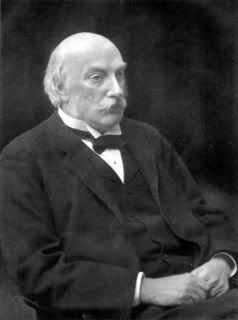
Why is it called Rayleigh? It was named after the scientist John William Strutt, who won the Nobel Prize for physics in 1904 and became the 3rd Baron Rayleigh. He wasn’t made a lord for his scientific work, he simply came from an aristocratic family. In fact Lord Rayleigh is described on the Nobel website as “one of the very few members of higher nobility who won fame as an outstanding scientist.”


And why was Lord Rayleigh called Lord Rayleigh? Because his grandmother was the first Baroness Rayleigh, and she lived elesewhere in Essex and chose the title “Rayleigh”, apparently because Rayleigh was a respectable place to be named after and that “Baroness Rayleigh” sounded good.

Saturday, April 14, 2007

A Car I'd Love to Buy


I'd love to buy this car. To begin with, it looks like a car from the future. The top speed, 115 mph, is more than enough for me. It seats six- four in the front, two in the back (facing the rear)

It has loads of features- a combustion efficiency gauge, oil temperature, manifold vacuum and fuel economizer gauges, battery charge level indicator, altimeter, barometer, compass, oil level gauge, tinted glass, and an all-wave radio.

It also has a thermostatically controlled climate control system and was heavily insulated to control wind and road noise. It has a safety-conscious design, with a padded leather dashboard, a shatter-proof (tri-laminate) windshield, indirectly illuminated gauges, and powerful headlights and fog lamps.

There are also no door handles - the doors open at the touch of buttons located on the outside and on the instrument panel.

It's been written about under the heading "Is This The Motor Car of Tomorrow?" and at a retail price of 12,500 dollars, it sounds affordable.

Only problem is, the Phantom Corsair is from the 1930s


It would fit in quite nicely in Daleks in Manhattan, though.
Chris expresses his own views on this weblog.


I write this blog in a private capacity , but just in case I mention any elections here is a Legal Statement for the purposes of complying with electoral law: This website is published and promoted by Ron Oatham, 8 Brixham Close , Rayleigh Essex on behalf of Liberal Democrat Candidates all at 8 Brixham Close.